Imagine the simple sandwich you make at lunchtime. Two slices of bread, a well-loved filling, perhaps a touch of mayonnaise, and lunch is sorted. What changes if you want to reduce the carbs in your diet?
The fillings might be no different, but changing the loaf could make a considerable difference. If you are considering keto-friendly eating, start by checking what those two bread slices contain.
Comparing Bread Using Your Usual Sandwich
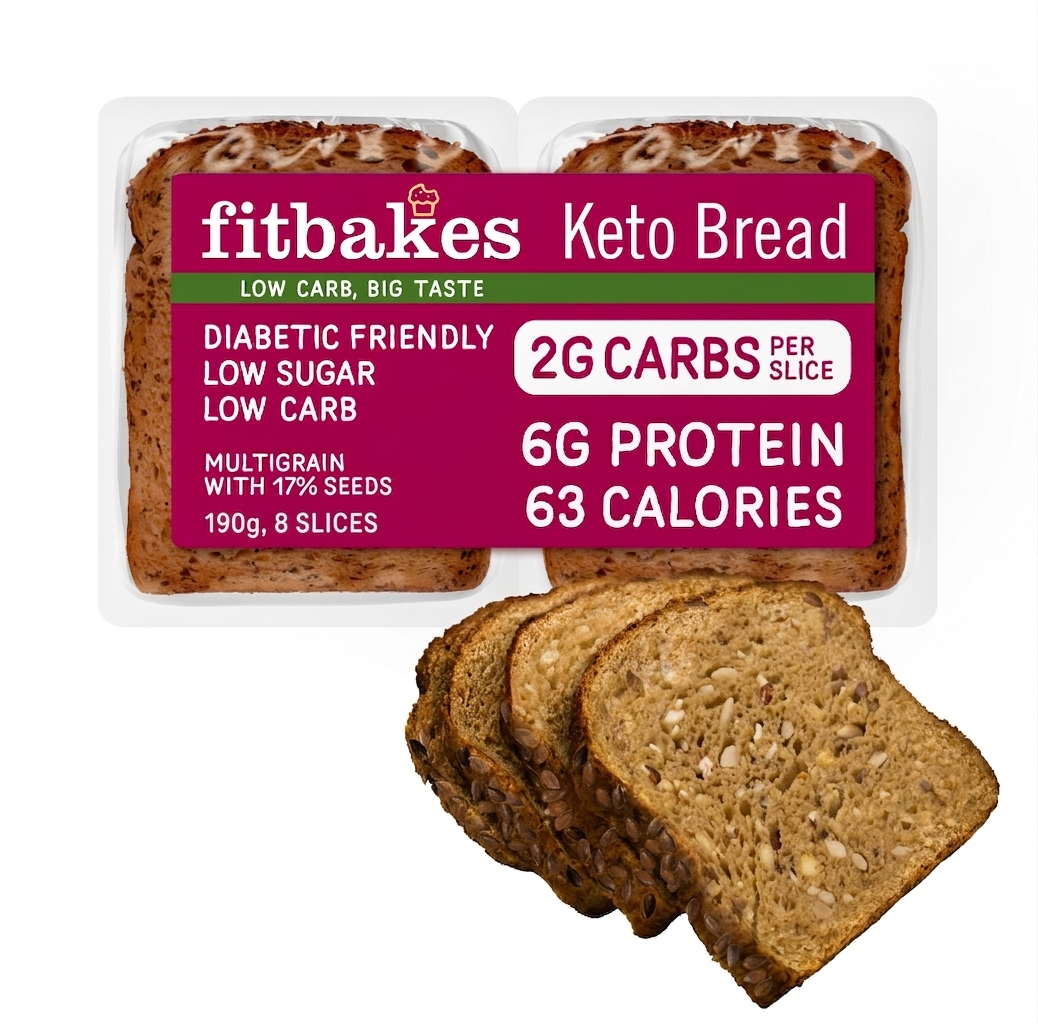
Image credit: fitbakes.co.uk
Searching for the lowest bread carbs can lead to difficult product comparisons. One product may show carbs per slice, whereas another highlights the amount per 100g. As opposed to compare the headline figures alone, think about your usual portion. For a sandwich made with two slices, add up the carbohydrates in the two slices before considering the sandwich filling.
A serving-based calculation helps you judge products by your normal serving. The manufacturer markets Fitbakes Seeded Low Carb Loaf at 0.8g net carbohydrates per slice; a two-slice portion gives approximately 1.6g net carbohydrates. The item page additionally mentions 2g carbohydrates; review the latest nutritional label before relying on a particular amount.
Understanding the Difference With Keto Bread
The conversation around bread and keto often focuses on whether bread should be cut out completely. Traditional wheat bread contains starch, which contributes significantly to its carbohydrate content. Keto-friendly alternatives use different formulations to provide a bread-like experience with fewer carbohydrates.
However, the term keto-friendly does not automatically mean a particular product contains no carbohydrates. Daily portions, spreads, fillings, and other meals still contribute to your daily carbohydrate total. Using lower-carb bread for a filled sandwich can leave more flexibility for the other ingredients.
Seeds, Protein, and Everyday Nutrition
A bread comparison should involve more than its carb content. The manufacturer lists 7g protein per slice and a 17% seed content for Fitbakes seeded bread, including golden linseeds and sunflower seeds. Its manufacturer-reported energy value is 63 calories in a single slice. The seeds add texture and flavour; protein also plays an important role in normal body maintenance.
When comparing bread with low carbohydrates, consider these nutritional characteristics alongside ingredient lists and allergens. Whether a loaf is right for you depends on your own nutritional needs, not only its carb figure.
Does Lower-Carb Bread Work for Toast?
One concern about alternative bread is whether it will have a satisfying taste. The texture of certain lower-carb loaves can feel unlike conventional supermarket bread. For a nutty and golden finish, Fitbakes suggests toasting its Seeded Low Carb Loaf. Serving ideas include toast with scrambled eggs or an open sandwich topped with avocado, tomatoes and your favourite seasoning.
Bread with low carbs can also accompany soup or provide a convenient base for a quick lunch. You do not need to reinvent every meal; familiar ways to serve bread can help make changes more manageable.
Check the Bread Label Before You Buy
The front of the pack does not tell the whole story about carbs in low carb bread; the nutrition label matters. Check the serving size, carbohydrate information, protein, fibre, and ingredients. On UK nutrition panels, carbohydrates and fibre are generally listed separately; certain international labels use different conventions.
A net carbohydrate claim deserves comparing with the item’s complete nutrition information. Products with different weights per slice are easier to evaluate when you consider the full label.
Reducing Carbs Without Changing Every Meal
Eating fewer carbs need not mean giving up your favourite meals. By choosing a suitable alternative to ordinary bread, you may be able to maintain your everyday meals with a distinct carbohydrate total.
One example is Fitbakes Seeded Low Carb Loaf, which pairs a seeded recipe with manufacturer-reported low carbs and high protein. Choose bread based on your dietary preferences, how much you enjoy it and how well it fits the meals you actually make.